
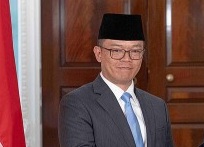
Indonesia has put forward a call for significant changes to the United Nations Security Council, emphasizing the need for the body to evolve in response to the challenges brought about by artificial intelligence and other modern technologies. During a debate at the UN headquarters in New York, Indonesian Foreign Minister Sugiono highlighted the rapid transformation of the global security environment due to technological advancements, including AI, autonomous weapons, and nuclear capabilities.
The minister pointed out that the current structure of the Security Council, which was established in the aftermath of World War II, is not adequately equipped to handle the complexities of today’s security issues without substantial reform. Indonesia is advocating for increased transparency, accountability, and inclusivity within the 15-member council, pressing for enhanced representation of developing countries and the Global South in significant international decisions.
In his remarks, Sugiono stressed that reform efforts should aim at restoring trust in the Security Council and bolstering its capacity to address pressing global challenges effectively. This perspective is echoed by UN Secretary-General António Guterres, who has also expressed concern over the pace at which technological advancements, particularly in AI and autonomous weapons systems, are outstripping the development of international regulatory measures, thus posing new and unpredictable risks.
The rise of AI applications in military contexts has emerged as a significant concern for governments and international entities alike. Recently, discussions within the Security Council have focused on the potential implications of AI in warfare and the necessity for responsible regulation of these evolving technologies.
Indonesia, aiming to secure a non-permanent seat on the Security Council for the 2029–2030 term, continues to champion reforms that would render the council more representative and proficient in addressing contemporary global security challenges.