
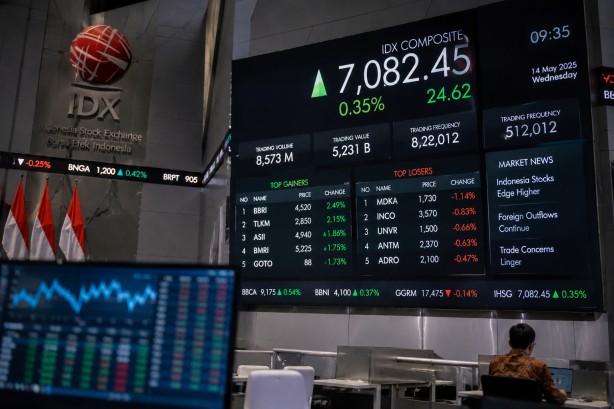
The Jakarta Composite Index (JCI), Indonesia’s primary stock market benchmark, experienced a 0.34% increase in the week concluding on July 24. This uptick was supported by heightened trading activity despite ongoing foreign investor withdrawals and pervasive global economic uncertainties. The Indonesian Stock Exchange reported that market capitalization had risen to Rp 10,870 trillion, with average daily trading turnover jumping by 41% to reach Rp 19.76 trillion.
Despite these positive domestic trading indicators, foreign investors continued to exhibit caution, remaining net sellers. The total foreign outflows have amounted to Rp 79.09 trillion so far this year, underscoring a persistent wariness regarding Indonesian assets. Analysts suggest that this sentiment is being influenced by external economic pressures, including fluctuations in global oil prices and the imposition of new tariffs by the United States.
Recent geopolitical tensions in the Middle East have contributed to a spike in global oil prices, a factor that has loomed over market sentiment. Adding to the complexity, the United States has implemented new tariffs on imports from several countries, including a 10% tariff on certain Indonesian goods. These developments have added layers of uncertainty for investors assessing the Indonesian market landscape.
In response to these challenges, Indonesia’s Finance Ministry has acknowledged that the rising oil prices could place additional strain on the 2026 state budget. Nevertheless, the ministry maintains that the overall fiscal position of the country remains stable, suggesting that Indonesia is well-positioned to navigate the current economic headwinds.