
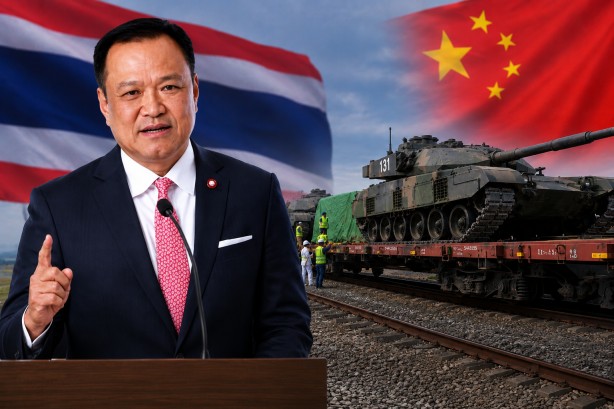
Thailand has raised alarms with China concerning its recent delivery of tanks to Cambodia, cautioning that this action could jeopardize the fragile ceasefire between the two neighboring nations following last year’s violent border skirmishes. The issue was brought to the fore by Thai Prime Minister Anutin Charnvirakul during a meeting with Chinese President Xi Jinping, as relayed by Thailand’s foreign ministry. Officials have voiced concerns that the timing and manner of the military shipment could further strain Thai-Cambodian relations, which remain delicate despite several ceasefire agreements.
The Thai government reported that Cambodia received 39 Chinese-manufactured T-59D battle tanks as part of an ongoing military cooperation deal. However, they noted that there is no evidence suggesting these tanks have been positioned near the contentious border. Tensions between Thailand and Cambodia have persisted since last year’s deadly confrontations along their shared frontier, with disputes over land and maritime boundaries rooted in colonial-era treaties continuing to obstruct peaceful negotiations.
China, for its part, has asserted that its defense collaboration with both Thailand and Cambodia is routine and does not target any third party. Earlier this year, China also provided Cambodia with a Type 056 guided-missile corvette, reinforcing its military support to the nation. Thai officials acknowledged China’s neutral approach and expressed gratitude for its attempts to defuse tensions, while underscoring that resolving the dispute ultimately requires direct dialogue between Thailand and Cambodia.
In addition to border issues, Thailand and China have agreed to establish a new dialogue mechanism involving their foreign and defense ministers. This initiative aims to foster communication and collaboration, with the first round of discussions anticipated to concentrate on tackling cross-border scam operations. By setting up this dialogue platform, both nations hope to address not only military tensions but also other areas of mutual concern, reinforcing regional stability and cooperation.