
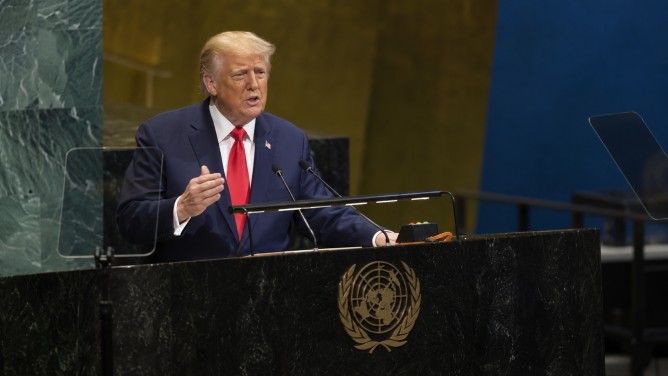
As global tensions simmer due to ongoing conflicts, the United Nations General Assembly is poised to become a pivotal stage for international discourse. Among the pressing issues is the conflict involving Iran, which has raised significant economic and geopolitical concerns, particularly with disruptions around the crucial Strait of Hormuz. In this context, U.S. President Donald Trump is expected to address the assembly, delineating his administration’s military strategies and diplomatic efforts related to Iran.
President Trump’s anticipated speech aims to defend U.S. military actions while underscoring his administration’s purported successes in strengthening Washington’s international standing. The address will likely highlight the dual pursuit of military strength and diplomatic solutions, a stance Trump has maintained throughout his presidency.
The Gaza conflict also remains a focal point, with Trump expected to discuss his administration’s endeavors to resolve the situation. This includes tackling issues such as Hamas disarmament and proposing reconstruction plans for Gaza, although tangible progress on these fronts has been limited.
Aside from specific conflict resolutions, Trump is likely to articulate his administration’s broader approach to international institutions, including the United Nations itself, which he has frequently criticized since his return to office. His visit to New York will also include meetings with various foreign leaders, notably Ukrainian President Volodymyr Zelenskyy and Japanese Prime Minister Sanae Takaichi, furthering diplomatic dialogues.
Meanwhile, UN Secretary-General António Guterres is expected to commence the assembly with remarks focusing on global conflicts and the rapid development of artificial intelligence, setting the stage for the discussions to follow.