
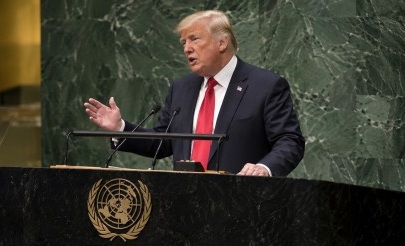
As discussions intensify globally regarding the regulation of artificial intelligence (AI), the United States has positioned itself against extensive international oversight of the technology. At the United Nations General Assembly in New York, President Donald Trump articulated a vision that diverges from the calls of over 20 global leaders advocating for unified safety protocols and standards in AI development.
President Trump proposed that the term “artificial intelligence” be rebranded as “super intelligence” in U.S. government documents, arguing that the term “artificial” diminishes the perceived capabilities of the technology. This proposal aligns with his administration’s stance on fostering AI advancement without restrictive global controls, despite warnings from experts about potential risks associated with the technology.
The current debate highlights differing approaches to managing the rapid advancements in AI systems. While some international leaders urge for stronger cooperation and regulation, Trump emphasized the potential economic benefits of AI, likening its impact to previous technological revolutions and dismissing concerns over its dangers as overstated.
In addition to the terminology change, Trump has suggested establishing an “AI Force” and appointing an AI czar to oversee AI initiatives within the United States. However, details about the operation and structure of this proposed framework remain sparse, leaving questions about its implementation and effectiveness.
Trump’s use of the term “superintelligence” deviates from its traditional meaning in AI research, where it describes a hypothetical system far surpassing human capabilities. This broader application reflects his administration’s push to reshape the narrative around AI as an essential driver of economic growth, while resisting global regulatory frameworks.